
Theory
Many businesses fail not because they lack effort, investment, or innovation, but
because they fail to align their offerings with genuine customer needs. In the world
of entrepreneurship and business growth, two concepts often emerge:
Market–Product Fit and Product–Market Fit. Though they sound similar, they
represent different perspectives.
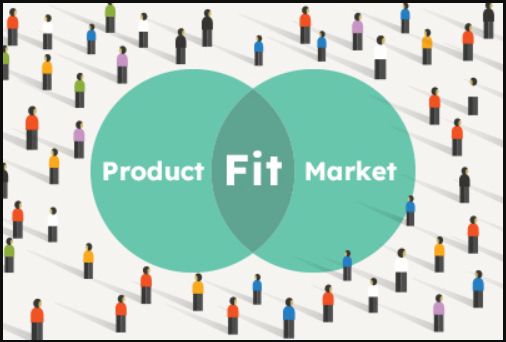
Product–Market Fit
Product–Market Fit occurs when a product successfully addresses a significant
need in a well-defined market. Customers find value in the offering, adopt it
willingly, recommend it to others, and continue using it. In simple terms, the
product solves a problem that the market genuinely cares about.
The question here is:
“Does my product fit the needs of the market?”
Examples include businesses that identify a customer pain point and create
solutions that become highly sought after.
Market–Product Fit
Market–Product Fit starts from a different angle. Instead of focusing on a product
first, the business begins by deeply understanding the market, its challenges,
aspirations, behaviours, and unmet needs. Only then is a product designed
specifically for that market.
The question here is:
“What does the market truly need, and what product should we create?”
This approach reduces the risk of building products that nobody wants.
The Key Difference
Product–Market Fit: Build a product and find the right market for it.
Market–Product Fit: Understand the market first and then build the
product.
While both are important, successful organizations often begin with
Market–Product Fit and eventually achieve Product–Market Fit.
The wisdom lies in remembering that businesses do not succeed because they love
their products; they succeed because customers love the value those products
create.
Story
An entrepreneur named Sameer was passionate about technology. He spent nearly
a year developing an advanced mobile application packed with features. He
believed it would revolutionize the market.
After launching, however, the response was disappointing. Downloads were low,
and customer engagement was minimal.
Frustrated, Sameer sought guidance from an experienced mentor.
The mentor asked a simple question:
“Before building the app, how many potential customers did you speak with?”
Sameer realized that he had focused extensively on the product but very little on
understanding the market.
Determined to learn, he began interviewing customers, studying their challenges,
and understanding their expectations. He discovered that people were looking for a
much simpler solution than the one he had created.
Using these insights, Sameer redesigned the product around actual customer needs.
This time, adoption increased rapidly, and positive feedback started flowing in.
The experience taught him a valuable lesson:
Customers do not buy products; they buy solutions to their problems.
By understanding the market first, he was finally able to create a product that truly
fit.
Activity
Reflect and write your responses:
1. If you run a business or plan to start one, what customer problem are you
trying to solve?
2. Have you spoken directly with potential customers to understand their
needs?
3. What one step can you take this week to better understand your target
market?
Quote
“Fall in love with the problem, not the solution.”
— Uri Levine
Take Away
1. Product–Market Fit means creating a product that customers genuinely value
and adopt.
2. Market–Product Fit means understanding customer needs before creating a
solution.
3. Businesses succeed when they solve real problems rather than merely
offering products.
4. Deep customer understanding reduces risk and increases the chances of
long-term success.