
Theory
Employee engagement is often misunderstood as employee happiness, entertainment or a collection of activities conducted by the organisation.
Engagement is much deeper than that.
An employee becomes engaged when he or she feels valued, respected, trusted
and connected to the purpose of the organisation. An engaged employee does
not merely come to work to complete a job; the employee develops a sense of
ownership towards the work.
Organisations often spend considerable time and money on team outings,
celebrations, rewards, games, events and engagement programmes. These activities
can certainly create moments of happiness and togetherness. But the most powerful
engagement strategy is much simpler: Make employees feel that they matter.
People want to know that their contribution is noticed, their opinions are heard,
their efforts are appreciated and their growth is important to the organisation.
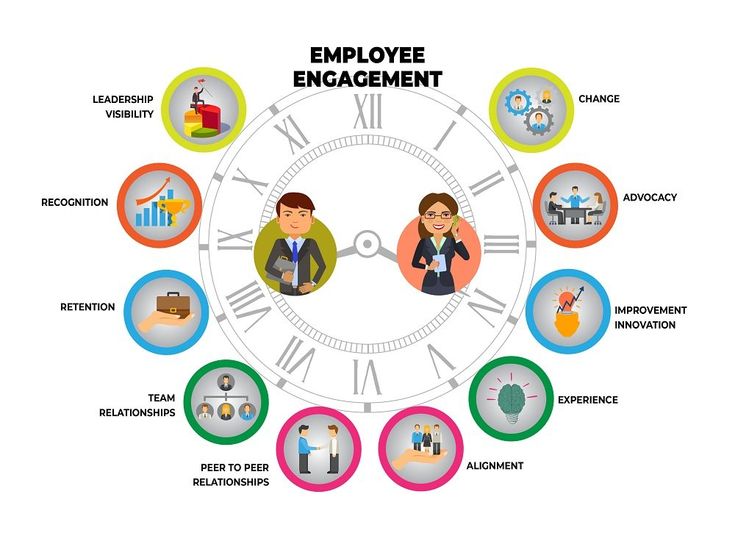
Some of the most powerful drivers of employee engagement are:
1. Recognition – Appreciate people for their genuine contribution.
2. Trust – Give employees responsibility and the freedom to perform.
3. Communication – Listen to employees and communicate openly.
4. Purpose – Help employees understand why their work matters.
5. Growth – Provide opportunities to learn, develop and progress.
6. Empathy – Understand employees as human beings, not merely as resources.
7. Ownership – Give people opportunities to contribute ideas and decisions.
The best engagement strategy therefore may not be an expensive programme. It
may simply be a manager asking an employee: “How are you doing?” And, more
importantly, genuinely listening to the answer. Employee engagement begins when
employees stop feeling like “someone working for the organisation” and start
feeling like “someone who matters to the organisation.”
Story
Anita was a hardworking employee in a growing company. She rarely
complained.She completed her assignments on time, helped her colleagues
whenever required and often stayed back to finish important work. But over the
past few months, something had changed. She was still doing her work, but the
enthusiasm was missing. One morning, her manager, Rajiv, noticed that Anita had
become unusually quiet. He called her into his cabin. “Anita, is everything
alright?” She smiled and replied, “Yes, everything is fine.” Rajiv almost ended the
conversation there. But instead, he asked, “Are you sure? I would really like to
understand if there is anything bothering you.” There was a long pause. Finally,
Anita said, “I sometimes feel that nobody notices the effort I put in. I don’t need a
big reward. I just want to know that what I do actually matters.”
Rajiv was surprised. He thought that because Anita had never complained,
everything was fine. A few days later, during a team meeting, Rajiv publicly
acknowledged Anita’s contribution to a difficult project. “Anita handled some of
the most challenging parts of this project. Her attention to detail helped us deliver
it successfully.” Anita smiled. Later that evening, Rajiv asked her, “Is there any
area in which you would like to develop yourself?” She mentioned that she wanted
to improve her presentation and leadership skills. Rajiv gave her an opportunity to
lead the next client presentation. It was not a salary increase. It was not an
expensive team outing. It was not a gift voucher.
It was recognition, trust and an opportunity to grow. Over the next few months,
Anita became more confident and involved. She started contributing more ideas
during meetings. She volunteered for new responsibilities and began helping
younger members of the team.
One day, Rajiv asked her, “What changed?” Anita smiled and said, “Earlier, I was
working because it was my job. Now I feel that my work has a meaning here.”
Rajiv realised an important lesson: Employee engagement is not about making
employees happy for a day. It is about making them feel valued every day.
Learning
The most effective employee engagement strategy is not necessarily a programme.
It is a culture. Employees become engaged when they experience respect,
recognition, trust, meaningful work and opportunities for growth. A celebration
may create happiness for an evening. A reward may create motivation for a while.
But feeling valued can create commitment. Managers therefore need to move
beyond asking: “What engagement activity should we conduct?” and start asking:
“What experience are our employees having every day?” Are they being heard?
Are their contributions recognised? Do they have freedom to perform? Do they
understand the purpose behind their work? Do they see opportunities to grow? Do
they feel safe to express their ideas? Do they feel that their manager genuinely
cares about them?
The answer to these questions determines the real level of engagement. The best
employee engagement strategy is therefore: Know your people. Listen to them.
Appreciate them. Trust them. Develop them. Give them purpose. When people feel
that they matter, they begin to make their work matter.
Activity
The Employee Engagement Check
If you are a manager or leader, think about your team and answer the following:
1. Do I regularly appreciate my employees for their genuine contributions?
2. Do I listen to their ideas and concerns?
3. Do I give them adequate trust and ownership?
4. Do I know their aspirations and areas of interest?
5. What is one thing I can do this week to make an employee feel valued?
Now choose one employee and take one meaningful action based on your answers.
Quote
“Everyone wants to be appreciated, so if you appreciate someone, don’t keep
it a secret.”
— Mary Kay Ash
Take Away
1. Employee engagement is not an event; it is an everyday experience.
2. People want to feel valued, respected, trusted and heard.
3. Recognition can often be more powerful than reward.
4. Give employees purpose, ownership and opportunities to grow.
5. Listen to your employees—not merely to respond, but to understand.
6. A good manager manages work; a great manager connects with people.
7. Do not ask only, “What can we do for employee engagement?” Ask, “What
can we do to make our employees feel that they matter?”
8. When people feel valued, they become more willing to contribute,
participate and take ownership.
9. The best employee engagement strategy is ultimately simple: Know. Listen.
Appreciate. Trust. Develop.