
Theory
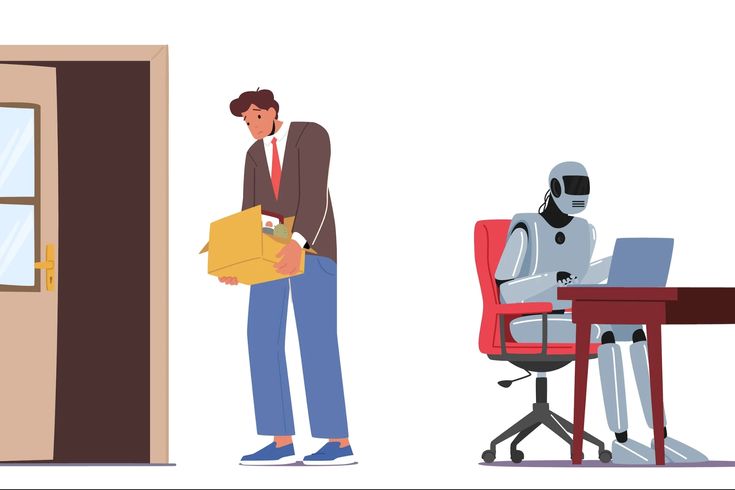
Artificial Intelligence is changing the nature of work. Jobs that involve repetitive,
predictable and rule-based tasks are more vulnerable to automation. Data entry,
basic bookkeeping, routine customer support, simple content creation, transcription
and repetitive administrative work may increasingly be performed by AI.
But the real question is not, “Will AI take my job?”
It is “Which parts of my job can AI take over—and what can I do that AI cannot
easily replace?”
Adaptability and flexibility are critical in a world disrupted by technology. We
need to move out of our comfort zones, learn continuously, gather multiple
perspectives and become creative and innovative.
Story
Rajesh had worked as a data-entry operator for twelve years. His job involved
entering information from documents into company systems. One day, his manager
introduced an AI-based system that could process the same documents in minutes.
Rajesh was worried. His colleague Meena told him, “Don’t compete with the
machine. Learn to work with it.”
Rajesh began learning data analysis, quality checking and customer
communication. Within a year, he was supervising the AI system and handling
tasks that required human judgment. The machine had not destroyed his career. It
had changed the career he needed to build.
Learning
AI is unlikely to eliminate every job overnight, but it can eliminate tasks that are
repetitive and predictable.
The safest strategy is therefore not to resist technology, but to develop the abilities
that become more valuable because of technology—critical thinking, creativity,
communication, empathy, problem-solving, adaptability and judgement.
Activity
Ask yourself:
1. Which 3 tasks in my job can AI potentially automate?
2. Which 3 abilities do I have that AI cannot easily replace?
3. What is one new skill I should learn in the next 90 days?
Quote
“The future depends on what you do today.” – Mahatma Gandhi
Take Away
1. AI may replace tasks before it replaces entire jobs.
2. Routine skills are becoming less valuable; human capabilities are becoming
more valuable.
3. Adaptability is no longer an advantage—it is a necessity.